The Rise of Link-in-Bio Tools
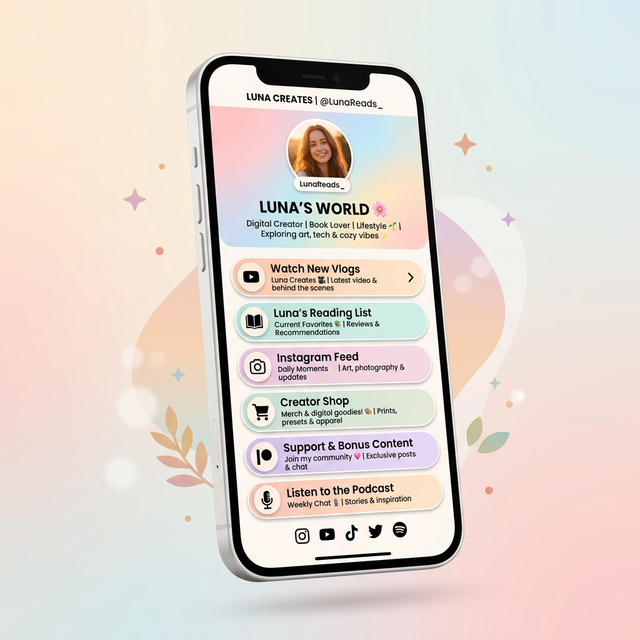
In the early days of social media, the digital footprint of a creator was simple. You had a profile, a feed, and maybe a website link in your bio. But as the ecosystem fractured into TikTok, Instagram, YouTube Shorts, Twitter, and LinkedIn, a critical problem emerged: the link bottleneck. Most platforms, in an effort to keep users within their "walled gardens," restricted creators to a single clickable link in their profile.
For years, this limitation stifled growth. Creators were forced to choose: link to their latest YouTube video? Their merchandise store? Their newsletter? Changing this link constantly was tedious, and often, by the time a user clicked a link from an old post, it was outdated.
Enter the Link-in-Bio tool. What started as a simple workaround has evolved into one of the most powerful assets in a creator's toolkit. It is no longer just a list of buttons; it is a dynamic landing page, a data collection hub, and a strategic funnel that bridges the gap between social discovery and deep engagement. In 2026, mastering link-in-bio tools is not optional—it is essential for survival in the creator economy.
The Evolution: From Workaround to Powerhouse
The first generation of link-in-bio tools was purely functional. They offered a vertical list of buttons on a generic background. While they solved the "one link" problem, they did little to convert traffic. They were digital business cards—static and forgettable.
Today's tools are sophisticated marketing engines. They offer:
- Full Customization: Brands can match colors, fonts, and backgrounds to their identity.
- Rich Media Embeds: You can embed videos, music players, and image galleries directly on the page.
- Email Capture: Integrated forms allow you to build your newsletter list directly from your bio.
- E-commerce Integration: Sell products directly without sending users to a third-party store.
This evolution reflects a shift in strategy. Creators are no longer just driving traffic; they are building owned audiences. The link-in-bio page is often the only piece of digital real estate a creator fully controls, independent of algorithmic feeds.
Why Link-in-Bio Tools Are Critical for YouTube Growth
You might wonder, "I'm a YouTuber; why do I need a link-in-bio tool?" The answer lies in the nature of modern consumption. YouTube is no longer just a destination; it is part of a broader content ecosystem.
1. Centralizing Your Ecosystem
Your audience finds you in different places. Some come from TikTok, others from Instagram Reels, and some from Twitter threads. Each platform has different strengths. A link-in-bio tool acts as a central hub where all these disparate traffic sources converge. Instead of sending an Instagram user to a YouTube video and a Twitter follower to a merch store, you send everyone to your Hub, where they can choose their own adventure.
2. The "Deep Link" Advantage
This is perhaps the most technical yet crucial benefit. Standard links often fail on mobile. If a user clicks a YouTube link from Instagram, it might open in a slow, clunky in-app browser where they aren't logged in. This friction kills watch time and subscriptions.
Advanced link-in-bio tools (like those integrated with OpeninYoutube) utilize deep linking technology. When a user clicks a button on your bio page, the tool detects their device. If they have the YouTube app installed, it opens the video directly in the app. This seamless experience drastically increases retention and conversion rates. It removes the barrier between interest and action.
3. Data Ownership and Analytics
Social platforms guard their data fiercely. Instagram tells you how many profile visits you got, but not necessarily what people did next. A link-in-bio tool provides granular analytics. You can see:
- Which specific link got the most clicks?
- What time of day represents peak traffic?
- Are your TikTok followers more interested in your merch or your podcast?
This data allows you to refine your content strategy. If your "Latest Video" link is underperforming compared to your "Free Guide" link, you know your audience is craving educational content over entertainment.
Key Insight: In 2026, your link-in-bio page is likely the highest-traffic page you own outside of YouTube itself. Treat it with the same care and optimization as your video thumbnails.
Strategic Design: Building a High-Converting Bio Page
Having the tool is step one. Using it effectively is step two. A cluttered, confusing bio page will repel users. Here is how to design a page that converts.
Prioritize the "Above the Fold" Experience
On mobile devices, screen real estate is precious. Your most important call-to-action (CTA) must be visible without scrolling. This is usually your latest video or your primary offer (e.g., a course or newsletter).
- Use Visual Cues: Don't just use text buttons. Use thumbnails or icons to draw the eye.
- Limit Choices: Paradoxically, too many links reduce conversions (the Paradox of Choice). Stick to 3-5 core links. Archive old links to keep the page clean.
Contextual Labeling
Never label a link "Click Here." Be specific about the value proposition.
Strong: "Watch: How I Gained 10k Subs in 30 Days"
Strong: "Shop My Camera Gear & Presets"
Specificity builds trust and curiosity. Users are more likely to click when they know exactly what they are getting.
Mobile-First Optimization
Over 90% of your bio traffic will come from mobile devices. Design your page vertically. Ensure buttons are large enough to be tapped easily with a thumb. Test your page on both iOS and Android to ensure deep links trigger correctly on both operating systems.
The Psychology of the Click
Why do users click one link over another? It often comes down to psychological triggers.
- Social Proof: Add a line like "Join 50,000+ subscribers" near your YouTube link. Numbers validate popularity.
- Urgency: If you are promoting a limited-time offer, add a countdown timer or use language like "Ends Soon."
- Exclusivity: Label links as "VIP Access" or "Community Only" to make users feel special.
Your bio page is not just a directory; it is a sales funnel. Every element should be designed to guide the user toward a specific action.
The "Content Waterfall" Strategy
Organize your links hierarchically:
Top (Priority): Latest YouTube Video (Deep Linked).
Middle (Value): Free Resource / Newsletter Signup.
Bottom (Monetization): Merch Store / Affiliate Recommendations.
This structure captures attention first, builds a relationship second, and monetizes last.
Common Mistakes to Avoid
Even with the best tools, creators often stumble into these traps:
- Link Rot: Failing to update the page. If your bio says "New Video Out Now" but links to a video from three months ago, you lose credibility. Update your bio with every upload.
- Slow Load Times: Adding too many high-resolution images or heavy scripts can slow down your page. In the mobile world, speed is king. Optimize your assets.
- Ignoring Analytics: Setting up the page and forgetting it. Review your click data weekly to see what resonates and prune what doesn't.
- Generic Branding: Using the default template without customization. Your bio page should feel like an extension of your channel brand, not a generic third-party site.
Warning: Beware of tools that inject their own ads onto your page. Nothing kills conversion faster than distracting your audience with someone else's promotions. Always choose a tool that gives you full control over the user experience.
The Future: Interactive and Dynamic Bios
Where is this technology heading? The future of link-in-bio tools is dynamic personalization. Imagine a bio page that changes based on who is viewing it.
- Geolocation: Showing tour dates relevant to the user's country.
- Time-Based: Showing "Live Now" buttons only when you are streaming.
- Referrer-Specific: Showing a TikTok-specific message to users coming from TikTok, and a different message to Instagram users.
We are also seeing deeper integration with AI. Soon, your bio page might automatically reorder links based on what each individual user is most likely to click, maximizing your conversion rate automatically.
Conclusion: Your Digital Headquarters
The rise of link-in-bio tools marks a maturation of the creator economy. It signifies a move away from relying solely on platform algorithms toward building independent, sustainable businesses. Your link-in-bio page is your digital headquarters. It is the one place where you control the narrative, the design, and the destination.
By leveraging advanced features like deep linking, robust analytics, and strategic design, you can turn a simple profile link into a powerful engine for growth. Don't let your traffic die in a walled garden. Build a bridge, optimize the path, and guide your audience exactly where they need to go.
Audit your bio today. Is it working as hard as you do? If not, it's time to upgrade.
Want More Creator Tips?
Join thousands of creators who use OpeninYoutube to grow their channels.
Sign Up Now